
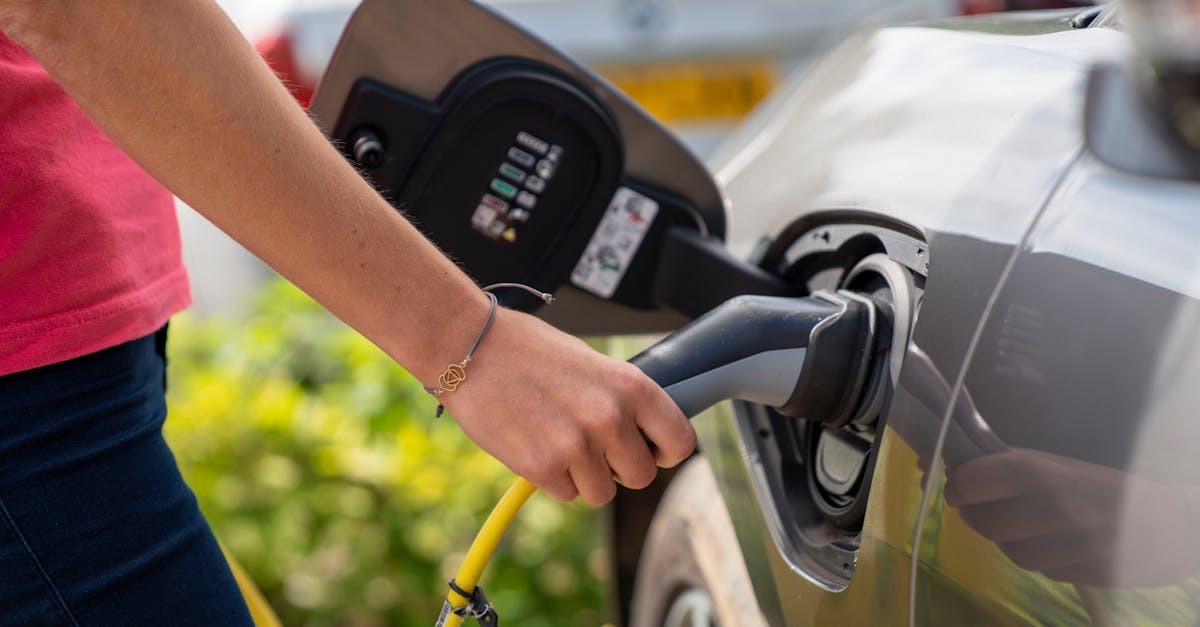
Wall Charger or Portable Charger: What Is the Practical Difference?
The short version: a portable EVSE starts working today with zero installation. A fixed wall charger charges faster but requires a licensed electrician, a dedicated circuit, and typically a switchboard assessment. Both are legitimate — the question is which matches your daily driving, your property situation, and how urgently you need more charge speed than a standard socket provides.
- Portable EVSE (Electric Vehicle Supply Equipment): plugs into a standard or 15A socket, no installation. Delivers 8–18km range per hour. Travels with the car.
- Fixed Level 2 wall charger: hardwired, 35–65km range per hour. Requires licensed electrician installation. Does not move.
- The speed gap: a fixed Level 2 charger adds 4–7× more range per hour than a standard socket.
- The cost gap: a quality portable EVSE costs $150–$400. A fixed wall charger installation costs $1,000–$3,000+ depending on switchboard work needed.
Head-to-head comparison
| Factor | Portable EVSE | Fixed Level 2 wall charger |
|---|---|---|
| Installation required? | No — plug into wall socket | Yes — licensed electrician |
| Charge speed (typical) | 8–18km range/hour | 35–65km range/hour |
| Cost (device only) | $150–$400 | $600–$1,500+ (device) |
| Total installed cost | $150–$400 | $1,000–$3,000+ |
| Moves with the car | Yes — portable | No — fixed to property |
| Works at other locations | Yes (where socket available) | No |
| Suitable for renters | Yes | Requires landlord approval |
| Smart charging / solar integration | Limited — depends on model | Yes — most fixed chargers support scheduled and solar charging |
| Right for daily driving under 60km | Yes | Yes (more speed than needed) |
| Right for daily driving 80–150km+ | Borderline — may not fully charge overnight | Yes |
When a portable EVSE makes sense
A portable EVSE is the right starting point for most new EV owners. It provides immediate charging capability from any standard Australian socket, with no trades involvement, no switchboard questions and no waiting for installation.
Use it when:
- You are not yet sure how much charge speed you actually need
- You rent and cannot install fixed equipment without landlord permission
- You want charging capability at multiple locations (home, holiday house, friends' properties)
- Your daily driving is under 60km and overnight charging on a standard socket is sufficient
- You are waiting for a fixed charger installation but need to charge now
What to look for in a portable EVSE:
- SAA/RCM certification — essential for Australian electrical safety compliance
- 10A and 15A socket modes — 15A delivers faster charging where a 15A socket is available
- Type 2 connector — compatible with most EVs sold in Australia
- Carry case or bag — these are expensive cables that benefit from protection in transit
Browse EV Charging Accessories for portable EVSE options.
When a fixed Level 2 wall charger makes sense
A fixed charger makes sense once you know your daily driving consistently outpaces what a portable EVSE can charge overnight, or when smart/solar integration becomes a priority.
Typical trigger: you are regularly driving 80–150km per day and the car is not fully charged by morning, or you have rooftop solar and want the car to charge from your own generation during the day.
The installation conversation:
- A licensed electrician assesses your switchboard capacity
- A dedicated 32A or 40A circuit is run to the charging location
- The charger is hardwired or connected to a dedicated outlet
- The DNSP is notified if required under your state's rules
Fixed EV charger installation is not a DIY task in Australia. In most states, connecting a charger to the home's wiring requires a licensed electrician and the work must meet AS/NZS 3000 wiring rules.
Start with a portable EVSE. Three months of use tells you whether you need faster charging or whether the portable option is permanently sufficient. Most households under 60km/day will never need anything else.
Browse EV Charging Accessories for portable EVSE cables and compatible accessories.