
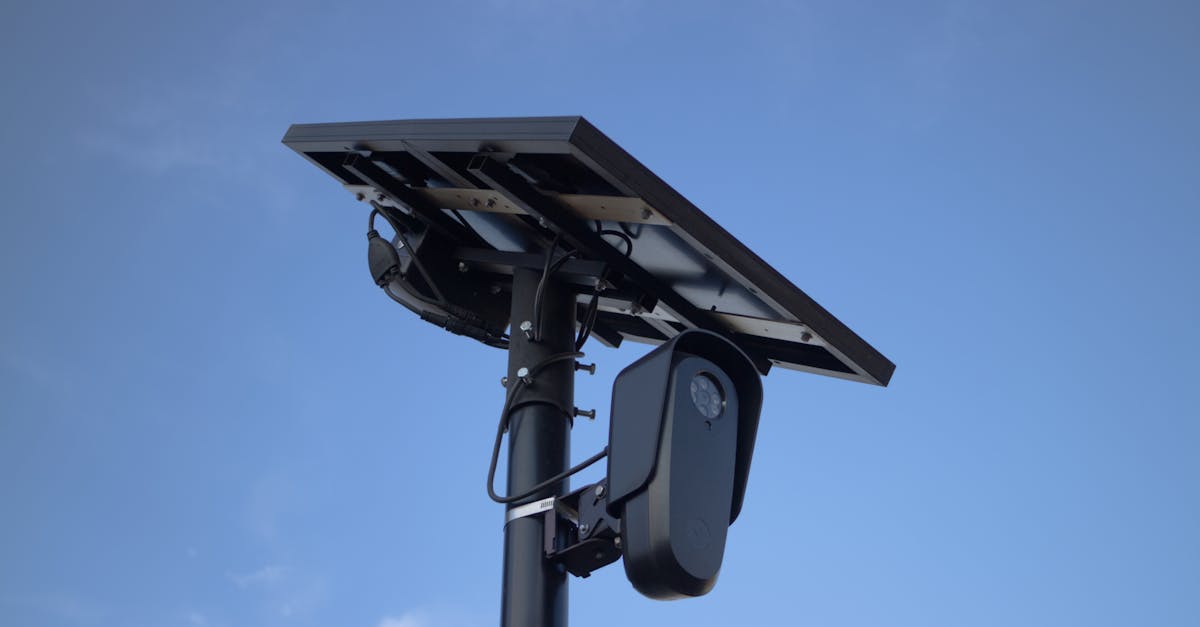
Solar Flood Lights: Brightness, Runtime and Placement
Solar flood lights are sold on lumen numbers. What determines whether they actually work is battery capacity, panel size and where you mount them. A 2,000-lumen light with a 1,200mAh battery will run flat in 3–4 hours in motion-sensor mode — fine for a brief driveway check, useless for all-night perimeter coverage. Matching the spec to the use case is the buying decision.
- Lumens tell you peak brightness, not runtime. A larger battery and panel determine how long the light actually works.
- Motion-sensor mode extends runtime 3–5× compared to always-on. Always-on mode drains even large batteries by midnight in winter.
- IP65 minimum for Australian weather. Below IP65, housing and seals fail within 1–2 seasons.
- North or east-facing panel placement with 3+ hours of direct afternoon sun is required for reliable winter charging.
- Beam angle matters: wide (120°+) for area lighting, narrow (60–90°) for focused path or gate coverage.
The three numbers that actually matter
1. Battery capacity (mAh)
Battery capacity determines runtime. Lumens do not.
| Battery size | Motion-sensor runtime | Always-on runtime |
|---|---|---|
| 600–800mAh | 2–3 hours | Under 2 hours |
| 1,200–1,500mAh | 6–8 hours | 3–4 hours |
| 2,000–3,000mAh | 10–14 hours | 5–7 hours |
| 4,000mAh+ | All night (most conditions) | 8–10 hours |
For year-round all-night coverage, 2,000mAh+ in motion-sensor mode is the practical minimum. Winter days are shorter — a smaller battery charged for 5 hours may not run the full night at useful brightness.
2. Panel wattage and size
The panel must collect enough energy during daylight to refill the battery overnight. In Australian summer, this is rarely the constraint. In Melbourne or southern areas through June–July, a small panel on a south-facing wall may collect only 1–2 hours of effective sun — not enough to recharge a large battery.
Bigger panel = more forgiving in winter and partial shade. Listings that specify panel wattage (e.g. 5W, 10W) are more informative than those that only list cell count. For a flood light with a 2,000mAh battery, a 5W+ panel is the minimum for reliable winter recharging.
3. Beam angle
| Beam angle | Best use |
|---|---|
| 60–90° narrow | Focused path, gate or stairway coverage |
| 120° medium | Driveway, side access or single-wall coverage |
| 150–180° wide | Carport, garden area, broad perimeter |
| 270°+ | Pole-mounted multi-directional area coverage |
Most Amazon AU flood lights list beam angle in the specifications. It is one of the most under-read numbers — buyers choose the highest lumen count and find the beam is too narrow or too wide for the actual space.
Placement: the decision that overrides product quality
A well-specified flood light in the wrong location underperforms a budget light in the right location.
Right placement: panel faces north or east, unobstructed from 10am–3pm. Camera or light body can face any direction — only the panel orientation affects charging.
Wrong placement: south-facing wall in winter shadow, under an eave that blocks afternoon sky, within 1m of a dense tree canopy.
Sensor range and angle: PIR motion sensors on flood lights typically detect 5–12m at a 120° arc. Mounting height of 2.5–4m provides optimal coverage without triggering on passing vehicles or animals at the property boundary. Higher mounting reduces false triggers; lower mounting improves detection of people close to the building.
IP rating for Australian conditions
| IP rating | Protection | Suitability |
|---|---|---|
| IP44 | Splash resistant | Not adequate for full outdoor exposure |
| IP65 | Water jets from any direction | Minimum for outdoor Australian use |
| IP66 | Strong water jets | Better for coastal, high-rain or exposed locations |
| IP67 | Immersion to 1m | Found on premium units — more durable long-term |
Australian UV, summer heat and rapid temperature cycling degrade low-rated housings faster than in European climates where most product ratings are tested. IP65 is the minimum; IP66+ is worth the small price premium for anything in full sun exposure.
- Driveways, carports, side gates and back fences where running power cable is impractical
- Renters — no electrical work, no landlord permission, remove when you leave
- Locations where grid-connected lights would require an electrician
- Anyone who wants lighting that continues working during a power outage (solar charges independently of the grid)
- Locations in heavy shade with less than 2 hours of direct afternoon sun
- Perimeters requiring continuous bright coverage all night in winter — a wired light with a timer is more reliable
- Work-level illumination — solar flood lights provide security and orientation lighting, not task lighting at construction or workshop levels
Choose by battery capacity (2,000mAh+ for all-night motion coverage), IP65 minimum, and a panel that faces north or east with 3+ hours of direct afternoon sun. Lumen count is a secondary decision — beam angle and runtime matter more for the actual use case.
Browse Solar Security picks for solar flood lights and security cameras.