
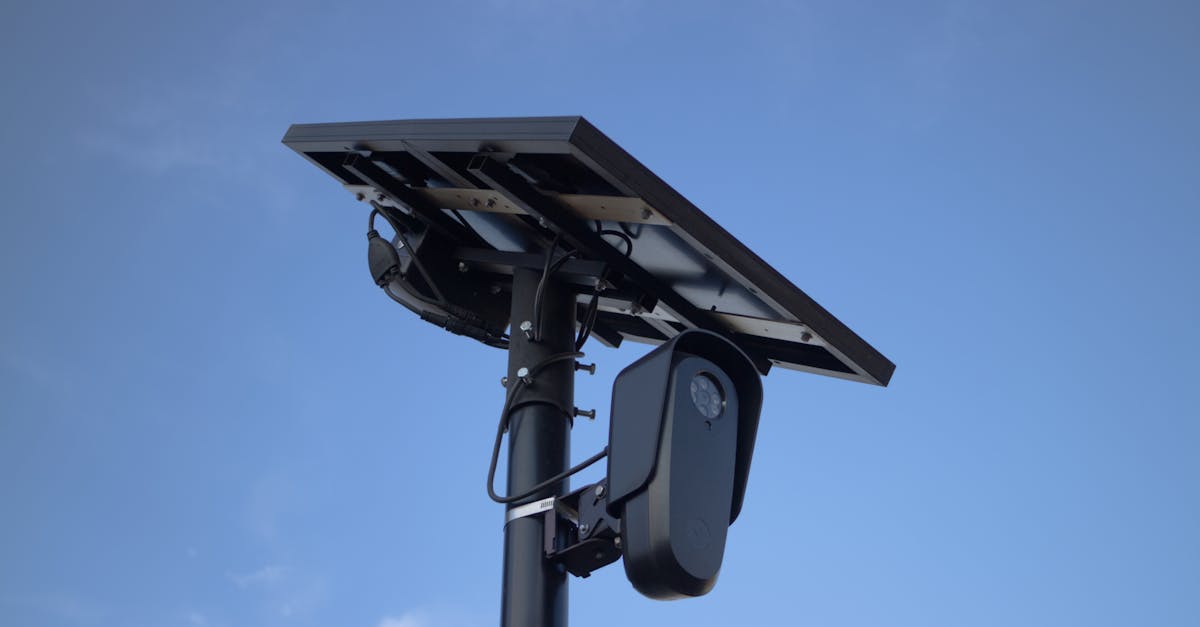
Outdoor Solar Products: What Weatherproof Ratings Actually Mean
"Weatherproof" on a product listing is not a single standard — it is a category that ranges from splash-resistant to full submersion tolerance. The number that matters is the IP rating: two digits that tell you exactly what the housing can handle. An outdoor solar product without an IP rating, or with a rating below IP65, is not reliably suited to full Australian outdoor exposure.
- IP rating = Ingress Protection. First digit: dust resistance (0–6). Second digit: water resistance (0–9). IP65 is the outdoor minimum.
- "Weatherproof" and "water resistant" without an IP number are marketing terms. They have no standard meaning.
- Australian conditions are hard on ratings: UV, heat above 40°C and rapid temperature cycling degrade seals faster than European test conditions assume.
- Solar panel efficiency is also affected by heat. High-temperature performance varies by panel type — monocrystalline handles heat better than polycrystalline.
What the IP rating numbers actually mean
The IP rating system (IEC 60529) uses two digits:
First digit — dust and solid particle resistance:
| First digit | Protection level |
|---|---|
| 4 | Protected against solid objects >1mm |
| 5 | Dust protected (limited ingress, no harmful deposit) |
| 6 | Dust tight (no ingress whatsoever) |
Second digit — water resistance:
| Second digit | Protection level | What it means in practice |
|---|---|---|
| 4 | Splashing water from any direction | Not adequate for rain exposure |
| 5 | Water jets from any direction | Adequate for most outdoor positions |
| 6 | Powerful water jets | Better for coastal, exposed or high-rain areas |
| 7 | Immersion to 1m for 30 minutes | Premium — found on high-end outdoor products |
| 8 | Continuous immersion beyond 1m | Specialist applications |
What this means for common solar products:
- IP44: indoor-outdoor borderline. Not suitable for direct rain or garden beds. Fails quickly in Australian conditions.
- IP65: the practical outdoor minimum. Handles rain, garden hose splash, dust. Sufficient for most Australian suburban outdoor locations.
- IP66: a meaningful step up. Appropriate for coastal locations, garden products exposed to sprinkler systems, or areas with heavy summer storms.
- IP67/IP68: premium outdoor products, flood-resistant. Found on premium solar security cameras and specialist lighting.
Why Australian conditions demand higher ratings
Most IP testing is conducted at controlled temperatures (typically 15–35°C). Australian outdoor products face:
- UV radiation intensity 2–3× higher than northern European test norms. UV degrades plastic housings and degrades seals even when water protection is still technically intact.
- Temperature extremes from below 5°C in winter nights to 45°C+ summer surfaces — the thermal cycling stresses gaskets and adhesives that hold IP ratings in place.
- Salt air in coastal locations attacks unprotected contacts, wiring and housings faster than standard IP tests account for.
What to check on the product listing
1. IP rating — stated with both digits. If only one number is given or the listing says "IP65 equivalent," treat this as unverified.
2. Housing material. Stainless steel or aluminium: more durable. Standard plastic: check for UV stabilisation claim.
3. Connector and cable rating. The IP rating of the housing body does not always extend to the cable entry point or connectors. Premium products specify cable gland ratings separately.
4. Operating temperature range. A product with a maximum operating temperature of 40°C will throttle or shut down on a 38°C summer day in direct sun. Look for 50°C+ rated products for outdoor Australian use.
Solar panel efficiency and heat
All solar panels lose efficiency above ~25°C cell temperature. At 45°C air temperature, panel surface temperature can reach 60–70°C — where rated output drops by 15–25%.
This affects solar security cameras, garden lights and any solar product where the panel is in direct full-sun mounting:
- Monocrystalline panels: lower temperature coefficient, handle heat better
- Polycrystalline panels: more affected by temperature, lower real-world output on hot days
For small solar products (pathway lights, cameras), the practical difference is modest — 10–15% efficiency variation. For larger portable panels used to charge power stations, monocrystalline is the better choice for Australian summer use.
Check for a stated IP65 or higher rating — not "weatherproof" or "water resistant" without a number. IP66 is worth the small premium for any coastal or fully exposed location. Housing material (stainless or UV-stable polycarbonate) and operating temperature range matter as much as the IP number for long Australian outdoor life.
Browse Solar Security picks for outdoor solar cameras and lighting with stated IP ratings.