
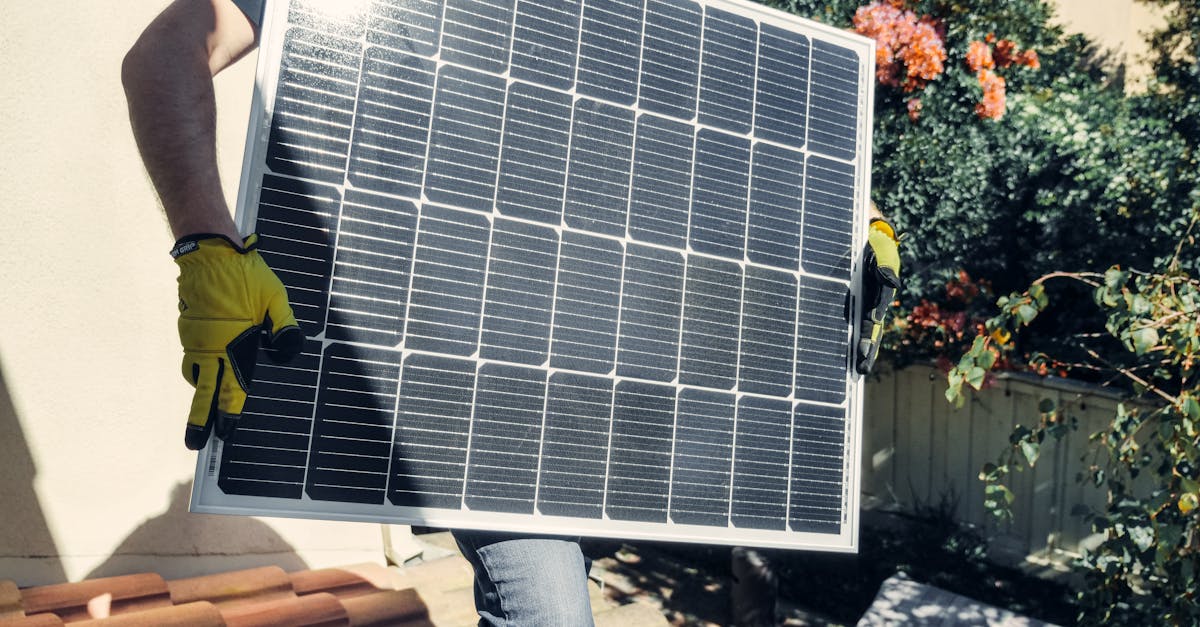
Charging an EV With Rooftop Solar During the Day
If you work from home, are retired, or regularly have the car at home during the day, charging from rooftop solar is one of the most cost-effective EV charging strategies available. Solar energy that would otherwise export to the grid at 6–12c/kWh instead charges the car at effectively zero marginal cost. An EV using 15–18kWh/100km over 100km/week replaces 15–18kWh of purchased electricity per week — worth $5.25–$6.30 at 35c/kWh, or $273–$328 per year.
- The car must be home when the panels are producing — typically 9am to 3pm. If the car is at work during those hours, daytime solar charging is not available.
- A portable EVSE plugged into a 10A socket adds 8–12km of range per hour. Over 4 hours of solar peak, that is 32–48km — enough for typical weekly driving.
- The feed-in tariff comparison is the key number: if you export at 8c/kWh and your charging tariff is 30c/kWh, self-consuming that solar instead of exporting saves 22c/kWh.
- Fixed EV chargers for faster daytime charging require professional installation.
The financial case in plain numbers
A typical 6.6kW rooftop solar system generates 25–35kWh on a sunny day. After household consumption, many homes with no daytime occupancy export 10–20kWh.
If instead that export charges an EV:
- 10kWh into an EV = 55–66km of range (at 15–18kWh/100km)
- 10kWh exported at 8c/kWh = 80c
- 10kWh of EV charging replaced from grid = $3.50 at 35c/kWh
The opportunity cost of exporting instead of self-consuming is $3.50 - $0.80 = $2.70 per day when the car is available.
Over a working year with the car home 2–3 days per week: $2.70 × 110 days ≈ $297/year in reduced charging cost. This is approximate — actual results depend on your export volume, feed-in rate, grid rate and driving pattern.
How to do it with a portable EVSE
A portable EVSE (Electric Vehicle Supply Equipment) plugs into a standard 10A or 15A socket and provides Level 1 charging.
Using a portable EVSE for daytime solar charging:
1. Plug the EVSE into a socket near the parking area
2. Connect to the car
3. Set the car's charging start time to 9am or 10am (when solar production is well established)
4. Set a charge limit that matches your daily driving needs — you do not need to fill the car completely
Charging speed from a portable EVSE:
- 10A socket: ~2.4kW → approximately 13–16km of range per hour
- 15A socket: ~3.6kW → approximately 20km of range per hour
- 4 hours of solar peak from a 10A EVSE: 52–64km of range added
For most households driving under 80km/day, this covers the requirement with minimal grid use.
The 15A socket upgrade
A standard outdoor 15A socket installation (not the EVSE — just the socket) costs approximately $200–$400 for a licensed electrician. This provides 50% more charging speed than a 10A socket from the same portable EVSE.
If the parking area has no socket at all, a licensed electrician can install one. This is standard electrical work — quicker and cheaper than a full EV charger installation.
When a faster charger is worth considering
A Level 2 hardwired charger (32A, ~7.4kW) charges at 4–5× the speed of a 10A portable EVSE. For daytime solar charging, this means the car can fill in 2–3 hours rather than all day.
Useful if:
- The car is home for short windows (leaving again mid-afternoon) and needs to charge quickly
- The solar system is large (10kW+) and generates substantial surplus — a fast charger can absorb it before it exports
Not necessary if:
- The car is home all day and slow charging from a portable EVSE covers the daily needs
A hardwired Level 2 charger requires a licensed electrician, a dedicated circuit and switchboard assessment. Budget $1,500–$3,000 total.
- Work-from-home households with rooftop solar — high match between solar peak and car availability
- Retirees with solar who park at home most days
- Households with a second car that stays home while the first goes to work
- Households where all drivers are away during 9am–3pm on weekdays — the solar peak and car availability do not overlap
If the car is home during daylight and the household has rooftop solar, plug in during the solar peak. A portable EVSE ($150–$400) is all that is needed to start. The saving depends on your feed-in rate and grid tariff — check both before calculating.
Browse EV Charging Accessories for portable EVSE cables suited to home and daytime solar charging.